Summer is on the horizon, and the North American Electric Reliability Corporation (NERC) published its annual report highlighting areas of concern regarding the reliability of the entire North American (across the U.S. and Canada) Bulk Power System (BPS) for the upcoming four-month (June-September) summer period.
FERC, NERC, and SPP
As a wholesale generation and transmission supplier, Sunflower coordinates with important entities to assess the seasonal readiness of the regional and national electric grids: the Federal Energy Regulatory Commission (FERC), NERC, and the Southwest Power Pool (SPP).
FERC is an independent agency of the U.S. government that oversees the power industry and gives NERC, an international regulatory authority, responsibility for developing and enforcing standards to ensure the reliability and security of the bulk power system. SPP, which coordinates electric reliability for a 14-state region in the central U.S., is a regional transmission organization (RTO) to which Sunflower belongs. FERC mandates SPP ensures the reliable supply of power, adequate transmission infrastructure, and competitive wholesale electricity prices.
NERC 2024 Summer Reliability Assessment
Like previous reports, NERC’s 2024 annual Summer Reliability Assessment (SRA) provides an evaluation of generation resource and transmission system adequacy, as well as energy sufficiency to meet projected summer peak demands and operating reserves. With this information, electric utilities across the nation can identify and mitigate threats to electric grid reliability.
NERC’s recent SRA shows all areas of the nation are predicted to have adequate energy resources during normal peak-load conditions from June through September. However, the SRA also indicated some areas of the nation face an elevated risk of electricity shortfall during extreme summer conditions. Fortunately, the SPP region, which includes the service territories of Sunflower and our Members, is not facing this elevated risk. SPP’s anticipated reserve margin, the amount of energy projected above the region’s usual seasonal demand for energy, is higher than last year due to higher expected wind contribution at peak demand and other resources capable of supplying SPP.1
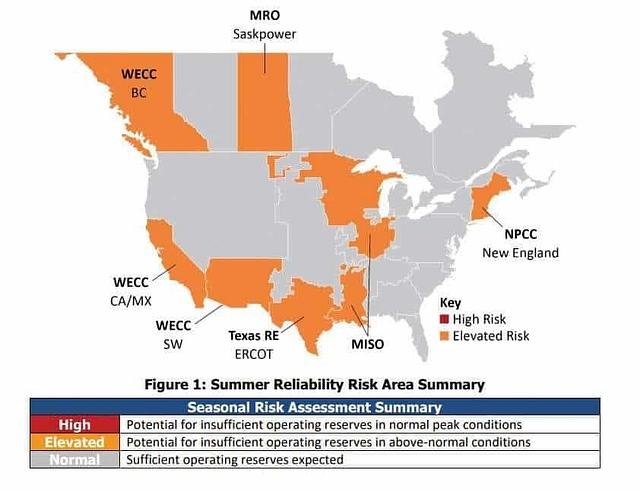
While SPP’s region is not facing an elevated risk of shortfall during above-normal peak conditions, extreme weather conditions could still require operating mitigations. A combination of low wind energy output, unanticipated generation outages (e.g., unexpected repairs on a generating unit), and high energy demand periods might lead to energy shortfalls. If extreme weather, unexpected outages, or other circumstances do affect the region, SPP and its members (like Sunflower) have systems, tools, and procedures ready to mitigate risks and maintain electric reliability. Under different scenarios, SPP may call on its member utilities’ generating units to run earlier or more often than usual, delay planned outages, import energy from neighboring systems, or tap into available reserves depending on the severity and duration of a reliability event.1
Grid Reliability Increasingly More Challenging
Although NERC’s SRA did not show elevated reliability issues in SPP’s region this summer, a growing concern continues across North America regarding grid reliability, both for the near term and future. The state of the grid has become precarious due to inadequacies in natural gas pipelines; changing policy and regulations; and complications constructing transmission lines. In addition, a recent EPA ruling mandates increased emission restrictions on coal facilities and new natural gas generating units, which will impact grid stability since electric utilities are being incentivized to replace these “always on” resources with weather-dependent renewable resources.
“This latest (NERC) report highlights the importance of always-available energy as our nation works to keep the lights on,” said NRECA’s CEO, Jim Matheson, in a recent article by the national cooperative association. “That’s particularly true as we look toward a future that depends on electricity to power more of the economy. Importantly, this report does not consider the impact of EPA’s power plant rule, which will significantly undermine reliable electricity across the nation.”2
Steve Epperson, president and CEO of Sunflower, also spoke to the importance of reliable energy. “Supplying reliable and affordable energy has always been our mission, and it’s always been complex. However, the challenges are coming even more rapidly than ever,” he said. “Rest assured, to meet our Members’ long-term demand for electricity Sunflower’s staff and board of directors will shore up our system for extreme seasonal operations and never let up the fight for reasonable energy regulations.”
Sources:
1North American Electric Reliability Corporation. (May 2024). “2024 Summer Reliability Assessment.”
2Kelly, Erin. (2024, May 15). “NERC Summer Assessment Warns of Potential Power Outages in Several Regions.” NRECA.