The U.S. Department of Energy (DOE) announced on Monday, December 16 it will no longer pursue the Midwest-Plains National Interest Electric Transmission Corridor (NIETC) in Kansas.
A NIETC is a geographic area designated by the DOE where significant electric transmission congestion exists or is projected to occur. According to DOE, these corridors aim to improve the reliability and efficiency of the electric grid by facilitating the construction of new transmission infrastructure. NIETCs also allow for an expedited regulatory process, enabling essential projects to address congestion issues, enhance grid resilience, and support the delivery of energy to areas in need.
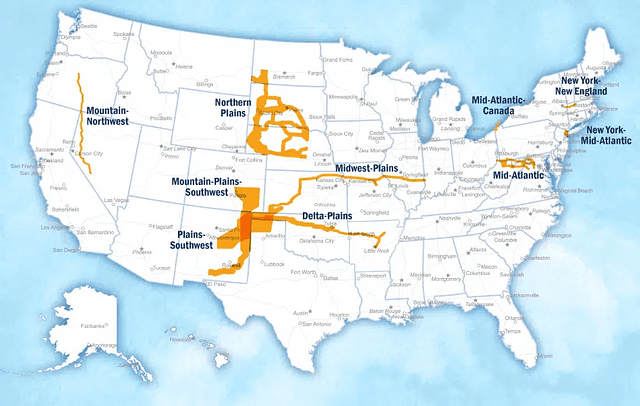
In May 2024 during Phase 1 of the NIETC designation process, DOE identified a preliminary list of ten potential NIETC corridors across the nation. The Midwest-Plains corridor in Kansas would have connected with the already approved Grain Belt Express, linking Kansas to a power transmission line stretching east through Missouri and Illinois to western Indiana.
Those living in the 14 affected Kansas counties expressed concerns with the overly vague proposal, DOE’s lack of engagement with landowners, and the potential use of eminent domain.
“Kansans living in the path of this proposed transmission line corridor spoke loud and clear: they did not want the federal government dictating what happens in their backyard,” said Kansas Senator Roger Marshall. “Kansans should determine what is built in Kansas, not federal bureaucrats.”
In September 2024, Marshall, Senator Jerry Moran, and Representative Tracey Mann introduced legislation to protect Kansan’s property rights from federal overreach by blocking the DOE from using tax dollars to purchase land along the proposed corridor. As a direct result of that work and outreach to the DOE, the Midwest-Plains Corridor was removed from the list.
Marshall added, “After months of relentless advocacy, including numerous roundtables and meetings with every county that would have been impacted, we took Kansan’s feedback and amplified their concerns directly to the DOE. We are glad to see Kansan’s voices were heard at the highest levels.”
*While they chose to not move forward with the Midwest-Plains corridor at this time, the DOE stated the decision does not preclude future consideration of these or other areas for NIETC designation.

Three NIETC corridors are proceeding to Phase 3 of the process. DOE stated they are “focusing on areas where it believes NIETC designation may be most valuable at this time to unlock federal tools to accelerate transmission deployment.” The three projects advancing are the Lake Erie-Canada Corridor, the Southwest Grid Connector Corridor involving Colorado, Oklahoma, and New Mexico, and the Tribal Energy Access Corridor in the Dakotas and Nebraska. DOE anticipates additional refinement of the corridors during Phase 3.
“Sunflower has made significant contributions to transmission development, particularly in western Kansas, and we will continue our efforts to strengthen the grid and our local communities,” said Al Tamimi, senior vice president and chief operations officer of transmission at Sunflower. “We remain committed to advancing and enabling the expansion of electric transmission in our region through coordinated transmission planning under the Southwest Power Pool.”
Read more at energy.gov and KSN News.