As a wholesale generation and transmission provider, Sunflower coordinates with three important entities to assess the electric grid's regional and national seasonal readiness: the Federal Energy Regulatory Commission (FERC), North American Electric Reliability Corporation (NERC), and the Southwest Power Pool (SPP).
FERC, an independent agency of the United States government, oversees the power industry and gives NERC, an international regulatory authority, responsibility for developing and enforcing standards to ensure the reliability and security of the bulk power system. SPP, which coordinates electric reliability for a 15-state region in the central U.S., is a regional transmission organization (RTO) to which Sunflower belongs. FERC mandates that SPP ensures the reliable supply of power, adequate transmission infrastructure, and competitive wholesale electricity prices.
2023 Summer Assessments
Each year, NERC’s Summer Reliability Assessment (SRA) identifies, assesses, and reports on areas of concern regarding the reliability of the entire North American (across the U.S. and Canada) Bulk Power System (BPS) for the upcoming season. The assessment provides an evaluation of generation resource and transmission system adequacy, as well as energy sufficiency to meet projected summer peak demands and operating reserves. NERC also performs an annual winter reliability assessment.
NERC’s 2023 SRA shows all areas are predicted to have adequate energy resources during normal peak-load conditions from June through September. However, the SRA also indicated the SPP region has an elevated risk for insufficient operating reserves in above-normal peak conditions. The output of wind generation in SPP’s territory will be a key factor in determining whether there is sufficient electricity supply during extreme weather conditions.
While the FERC 2023 Summer Energy Market and Electric Reliability Assessment predicts higher-than-average temperatures nationwide will increase electricity demand for the upcoming summer, the report also shows a slight decrease in risks to reliability in normal peak-load weather conditions compared to last summer. Other bright spots during the last 12 months are the increased supply and higher inventories of natural gas, as well as a 71.3% decrease in the cost of natural gas.
As the RTO for the central U.S. from the Canadian border to the southern edge of Texas, SPP is responsible for real-time monitoring of power flow and voltage across more than 70,000 miles of high-voltage transmission lines. SPP’s Summer Seasonal Assessment focuses on predicting summer energy reliability in its footprint, including the territory served by Sunflower and our member-owners. SPP’s 2023 report shows a 99.5% probability of having sufficient resources to serve the region during peak hours throughout the summer.
If extreme weather, unexpected outages, or other circumstances do affect the region, SPP and its members (like Sunflower) have systems, tools and procedures ready to mitigate risks and maintain electric reliability. Under different scenarios, SPP may call on its members’ generating units to run earlier or more often than usual, delay planned outages, import energy from neighboring systems, or tap into available reserves depending on the severity and duration of a reliability event.
Grid Reliability Becomes More Challenging
The good news is all three entities (FERC, NERC, and SPP) predict adequate generation and transmission to ensure electric reliability during normal peak weather patterns this summer. The concerning news is NERC’s report indicates two thirds of the U.S., including the SPP region, has an elevated risk for insufficient operating reserves in above-normal peak conditions.
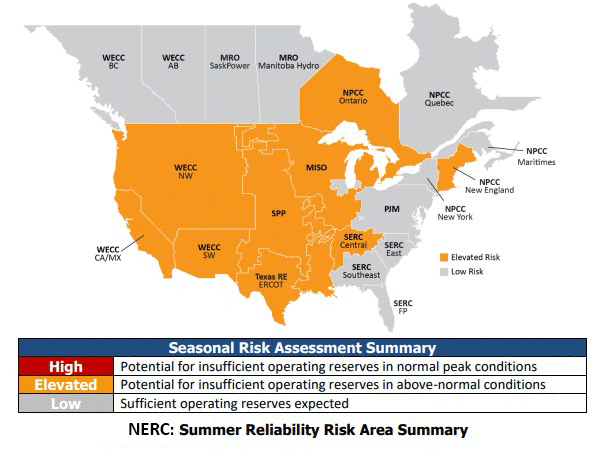
The concern regarding grid reliability, both for the near term and future, received heightened awareness after extreme weather conditions like Storm Uri and Storm Elliott exposed the grid’s vulnerabilities. Closing power plants that operate using fuels such as coal and natural gas and replacing them with renewable (weather-dependent) resources; inadequacies in natural gas pipelines; changing policy and regulations; and complications to construct transmission are affecting the reliability of the electric grid. These issues are complex and usually require years, if not decades, to resolve.
“Supplying reliable and affordable energy will always be our mission,” said Steve Epperson, Sunflower’s interim president and CEO. “However, it becomes more challenging with unpredictable weather events, emerging policies and regulations, and more weather-dependent generation resources. Be assured our Sunflower team and board will continue to proactively prepare the system for current seasonal operations, as well as other challenges in our industry.”